
 Contact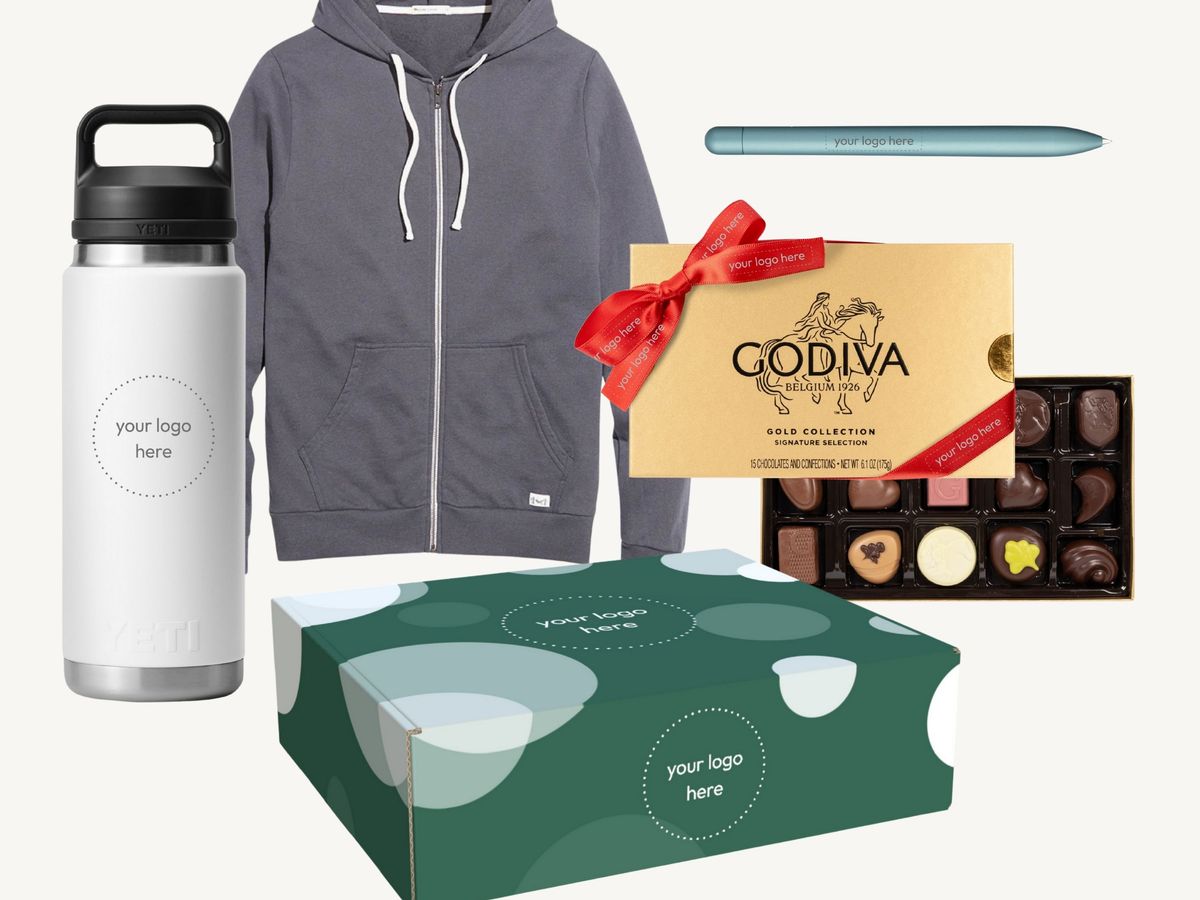
Build an Employee Gift Box Program
Browse pre-built merch packs or tell us what triggers you want to support (new hires, anniversaries, recognition, holidays).
An employee gift box is a package of branded merch and gifts an employer sends to a specific employee for a moment that deserves more than a Slack message. Think a new-hire welcome box on day one, an anniversary box at year five, a recognition box after a launch, or a holiday box in December. The contents change. The function does not: turn a transactional moment into one that feels like the company put thought into it.
Most companies already send something. The problem is what they send. Generic logo tumblers, screen-printed t-shirts in the wrong size, a cheap notebook, a stress ball. The box arrives in a brown corrugated mailer with packing peanuts. Employees take photos for Slack out of politeness, then the items go into a drawer or a thrift pile. The box did its job in the sense that it shipped, but it did not earn the company anything.
A real employee gift box is different in three ways: the items inside, the packaging, and the moment-to-shipment time. This guide covers what to put in the box, what to budget, when to send, and how to run a program that ships within 48 hours of the trigger event. For the broader category framing, see our corporate swag boxes guide for HR teams.
When to send an employee gift box
Employee gift boxes work best when the moment is specific. Generic appreciation boxes get diminishing returns. Boxes tied to a named event land harder, every time.
Day one for a new hire. The welcome box is the most common entry point. New hires get the box at home before they start, or at their desk on day one. Contents skew toward apparel (size collected during pre-boarding), drinkware, and a few "feels like home" extras. See our new hire welcome kits guide for the full breakdown on what works and what HR teams over-spend on.
Recognition for a launch, a win, or a milestone. A recognition box is the physical version of a public thank-you. Sent within a week of the moment. Smaller in volume than the welcome box, often more premium per item. The employee recognition gifts guide covers the difference between recognition that sticks and recognition that gets forgotten by the next Monday.
Work anniversaries, especially at five and ten years. Most companies still mark year five with an email and a Slack reaction. A real anniversary box, sent the week of the work-iversary, signals the company actually noticed. See our work anniversary gifts guide for product picks at each tier.
Holidays and year-end. December gift boxes are a year-end ritual at most well-run companies. The risk: the box looks like every other vendor box that shows up in December. Anchor on one or two items clearly chosen by your company, not picked from a generic holiday catalog. The corporate holiday gifts guide goes deeper on this.
Farewells and offboarding. The least-common employee gift box, but the most underrated. A box at the goodbye signals the company means it when it says "you're always welcome back." Useful for alumni networks and rehires.
What goes inside a great employee gift box

The strongest employee gift boxes have a clear point of view about what they include. Three to five items, each one chosen for a reason. The same items in a different combination would not work. Here's the framework we use with HR teams running their first program.
One piece of drinkware that the employee actually wants. This is the anchor item. Skip the generic logo tumbler. Reach for a brand the employee already knows and trusts. The two we recommend most often: Custom Owala FreeSip bottles for company-wide rollouts with a younger team, and Custom YETI Ramblers when the budget supports the higher per-unit cost or the audience skews older or outdoorsy. Either choice makes the box feel like a premium gift instead of a giveaway.
Apparel that fits. This is the second anchor. Sweatshirts and crewnecks beat t-shirts for employee gift boxes. Higher perceived value, more wear, fewer size disasters in the closet. Two reliable picks: a Marine Layer crewneck or a Patagonia Better Sweater for premium boxes. The trick to getting sizing right: ask the employee through a Claim Pages self-service link instead of guessing or asking the manager. Sized-wrong apparel is the single biggest reason employee gift boxes fail.
Two to three small extras that make it feel like a kit, not a uniform drop. Stickers. A notebook the employee will actually open (Baronfig or Field & Co, not the standard cheap one). A high-quality pen. A snack from a brand the employee has heard of. The role of the extras is to make the box feel like someone thought about it, not just submitted a corporate order.
What to leave out. Cheap promotional pens. Branded stress balls. Single-use anything (plastic water bottles, paper straws). Items with the company logo on every surface. Generic chocolate. Anything that does not pass the "would I show this to a friend" test. Padding for the sake of padding kills the box.
Budget tiers: what employee gift boxes actually cost
Pricing varies by content and packaging. Use these tiers as a starting point. All figures include the box, the packaging, the items, decoration, and per-recipient shipping inside the contiguous US.
Entry tier ($40 to $60 per recipient). One piece of drinkware, one item of apparel (typically a t-shirt), one or two small extras, branded mailer. Common for events, conference giveaways, or company-wide rollouts of 500 or more employees. The trade-off: items in this tier feel real but not premium. A good fit for trade-show kits or larger merch rollouts.
Standard tier ($75 to $125 per recipient). Premium drinkware (Custom Owala or Stanley), a sweatshirt or crewneck, two to three considered extras, premium packaging. The sweet spot for new-hire welcome kits and milestone gifts at most 50 to 500 person companies. The box feels like a real gift without breaking the per-employee budget.
Executive tier ($150 to $300 per recipient). Custom YETI Bottle, Patagonia Better Sweater or Vuori Ponto Pullover Hoodie, premium notebook, branded box with a printed insert card. Reserved for milestone anniversaries (five and ten years), executive recognition, and major launches. Per-unit cost is high, but the box does work for the company every time the recipient wears or uses an item.
How to set up an employee gift box program
A one-off box is straightforward. A program that ships boxes every time a new hire joins, an anniversary lands, or a milestone gets hit requires a few moving pieces.
1. Choose the kit contents and lock them in. Build the box once. The mistake first-time HR programs make is treating every box as a custom build. Pick three to five items, document them, and reorder the same kit for the next 200 employees. The Merchwell merch packs catalog has pre-built options if you want to skip the design phase entirely.
2. Decide on packaging. A printed mailer with the company logo, a printed box with branded tissue paper, or a generic Kraft box with a sticker. Each tier signals something different. Match the packaging to the budget tier of the contents.
3. Collect addresses and sizes through a self-service portal. Use Claim Pages so the recipient enters their own address and size when the trigger fires. No HR spreadsheets, no manager guessing, no wrong-size sweatshirt sitting on the front porch of someone's old apartment.
4. Set up storage and on-demand fulfillment. Order the inventory once for a full quarter of new hires, anniversaries, or recognition events. Hold it with Merchwell's storage and kit fulfillment service. The box ships within 48 hours of the trigger event instead of three weeks. The faster the box arrives after the moment, the more impact it has.
Common mistakes HR teams make
Padding the box. Adding three more cheap items because the box "looks empty." A clean three-item kit beats a stuffed seven-item one every time. Empty space is a feature, not a flaw.
Letting the design committee win. The branded mug with the logo on both sides, the company values on the bottom, and a QR code on the handle is not what employees want. Restraint on logo size and placement matters more than people expect.
Shipping the box weeks after the moment. An anniversary box that arrives three weeks after the work-iversary lands flat. A new-hire box that shows up on week three of the job has missed the window. Build the fulfillment workflow before the contents.
Treating every box like a custom build. The whole point of a program is consistency. Pick the kit, document it, hold inventory, ship on demand. Reinventing the box every time burns hours and creates inconsistency between recipients.
The employee gift box is one of the few HR tools where the math is unambiguously positive. According to SHRM research on employee experience, recognition that arrives close to the moment correlates with higher retention and stronger engagement than recognition delivered weeks or months later. A box that ships within 48 hours of a trigger event does what a delayed gift cannot. The investment in a tight kit and a fast fulfillment workflow pays back through retention, referrals, and the cumulative trust an employer builds when it shows up on time.
Noah Jolly is the founder and CEO of Merchwell, where he helps HR and People Ops teams at 50 to 500 person companies build new hire kits and merch programs employees actually keep. He writes about onboarding, employee experience, and the operational details of running a premium merch program.
The single biggest lever on employee gift box impact
Shipping speed. A box that arrives within 48 hours of a trigger event lands harder than the same box shipped a week later. Build the fulfillment workflow first, then layer the contents on top.
Get pricing on an employee gift box program
Tell us how many people you're sending boxes to and which triggers you want to support, and we'll send back a kit recommendation, a per-recipient budget, and a fulfillment timeline.
Get a quote for your team
Tell us what you have in mind and a rough quantity. We'll send pricing, a mockup with your logo, and lead times.


