
 Contact
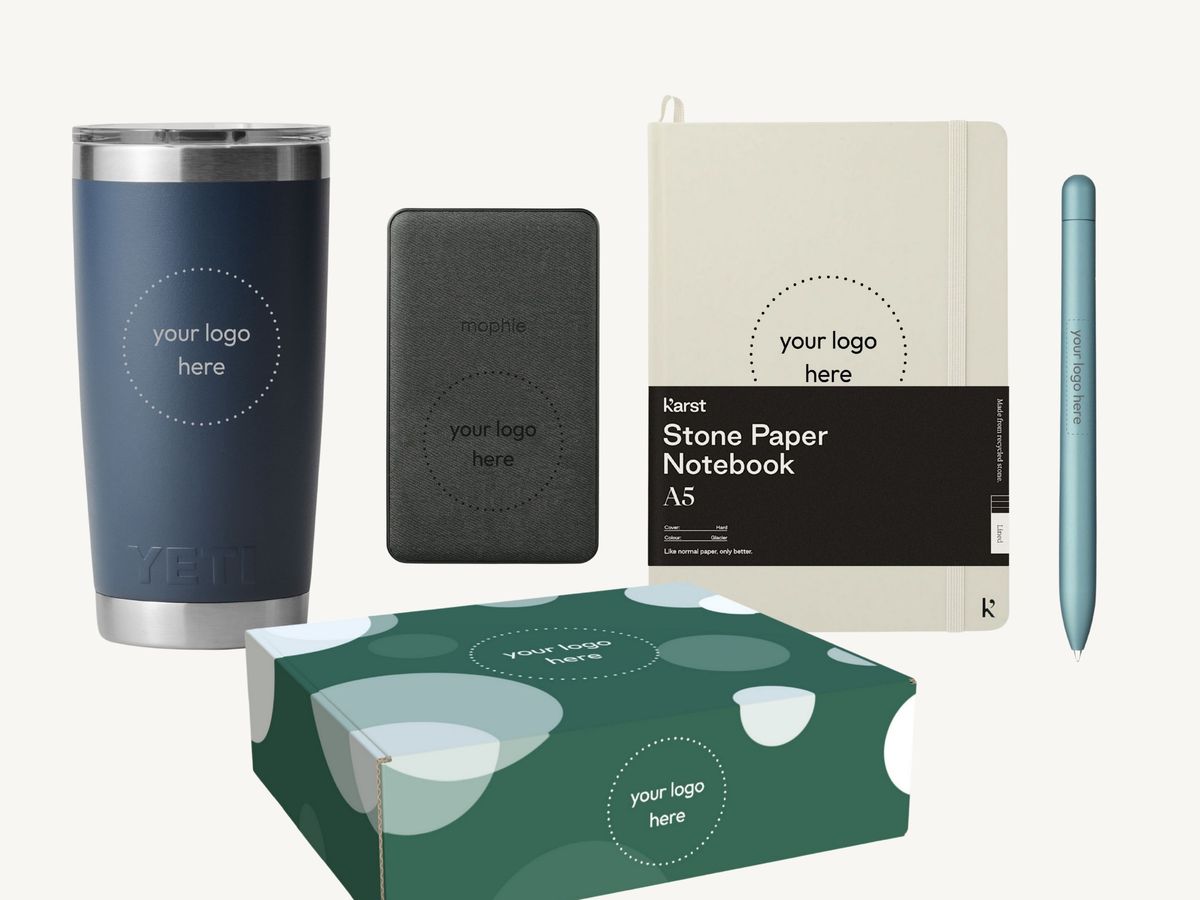
Build a welcome box new hires actually post about
Start from our Welcome Essentials pack or build your own from the catalog, and we'll handle packing and per-address delivery.
A welcome box is the version of a corporate swag box built for one specific moment: someone's first day. The best ones hold four to six items: quality drinkware, one soft wearable in the right size, something useful at the desk, a small treat, and a note that sounds like a human wrote it. The worst ones hold whatever was left in the supply closet. We pack thousands of these for HR teams every year, and the gap between the two is the gap between a new hire posting their box on LinkedIn and a new hire quietly recycling it.
One housekeeping note before the list. We use welcome box and welcome kit interchangeably, and the program strategy lives in our new hire welcome kits guide. This post stays narrow on purpose: what goes inside the box, what stays out, what it should cost, and when it should arrive.
Does a welcome box actually matter?
More than almost any other merch spend, because of when it lands. A new hire's first day is the single moment they're most alert to signals about their new employer, and an empty desk sends one too. Gallup's research on recognition found that employees who feel genuinely appreciated are nearly four times more likely to be engaged at work, and day one is the cheapest appreciation you'll ever buy. The person hasn't done anything yet. The box says we're glad you're here anyway.
There's a program payoff too. SHRM's reporting on recognition programs ties structured recognition to meaningfully lower voluntary turnover, and a welcome box is the first structured touch in that system. Teams that get day one right usually extend the same kit format to promotions, anniversaries, and employee recognition gifts down the line.
How is a welcome box different from a swag box?
Scope and timing. A swag box is the general-purpose format: any audience, any occasion, built from the full catalog. A welcome box is a swag box with one job, and that job shapes every choice. The audience is a single person you barely know yet, so trusted brands matter more than deep personalization. The timing is fixed, so fulfillment reliability matters more than flash. And the letter, optional in most kits, is mandatory here.
If you're also building kits for clients, events, or recognition moments, set the broader format first and let the welcome box be its day-one variant. One catalog, one decoration standard, one warehouse, several occasions.
What goes in a welcome box?
Four to six items. Enough to feel substantial, few enough that every piece earns its spot. Here's the lineup we pack most, in priority order.

Drinkware they'll use every day
The anchor item. An Owala FreeSip 32 oz or a piece from our custom Stanley tumbler program gives the new hire something they'll carry to every meeting from day one. Drinkware sits near the top of PPAI's research on impressions per dollar across the promotional products industry, and inside a welcome box it doubles as the piece that sets the quality bar for everything else.

Owala FreeSip 32 oz

One soft wearable, in their actual size
A Classic Hoodie or lightweight crewneck with restrained decoration. The size detail matters more than the garment: a hoodie in the wrong size says nobody checked, and nobody wants to ask HR for an exchange in week one. Collect sizes before the start date, or skip apparel entirely.

A notebook worth opening
Pair a Moleskine Hardcover Notebook with a decent pen to cover the first-week flood of names, systems, and acronyms. Skip the thin spiral pad with a logo on every page. A notebook the person would buy themselves gets used long after onboarding ends.

Moleskine Hardcover Notebook

A small treat and one playful piece
Add a good snack, a sticker sheet with the brand mascot, or a pair of crew socks. One light item keeps the box from feeling like an equipment issue. One is also the limit. Two playful pieces and the box starts reading as filler.

The welcome letter
The cheapest item and the one that decides how everything else lands. A short note from the manager naming why the team hired this specific person beats a printed card from a company nobody met. Three sentences, signed by a human. If the box ships before day one, the letter is the first thing they should see when the lid opens.
What to write: why the team picked them, one thing the interviewers remembered, and one line about what the first month looks like. Skip the mission statement. They already read it during the interview process.
The role-specific extra
Optional, and worth it at the senior tier. A laptop backpack for field roles, a better mug for the office-bound, a second drinkware piece for a remote hire's home desk. Match it to how the person will actually work, not to what's left in inventory.
What should you leave out of a welcome box?
Paperwork. Benefits forms and policy booklets belong in an email, not between a hoodie and a snack. The box is a gift, and gifts don't come with homework.
Skip the classic filler too: logo pens, stress balls, mousepads, lanyards, a mission-statement booklet, apparel in one-size-fits-nobody, and cheap drinkware from a brand nobody recognizes. Every filler item costs little and subtracts a lot, because the new hire judges the box by its weakest piece.
One more quiet failure: the box that's clearly recycled event inventory. Conference totes, last summer's picnic shirts, a bottle with the old logo. New hires can't always name what feels off, but they can tell when the box wasn't packed for them.
The test we use when packing: if an item only makes sense because the logo is on it, it doesn't go in.
Should the welcome box be branded?
Lightly. One logo per item, sized with restraint, and at least one piece with no logo at all. The new hire didn't pick this employer for the merch, and a box where every item shouts the company name reads as marketing, not welcome. The snack and the treat stay unbranded on purpose: they're for the person, not the brand.
Decoration that respects the item survives the first wash and the first repack. A monogram or a small tone-on-tone mark outperforms a chest-sized print on every garment we ship.
How much should a welcome box cost?
Budget per hire, by tier. These are advisory spending ranges, not product prices, and they map to the three preset packs we build most.
$25 to $50 per hire covers the essentials: drinkware, notebook, treat, letter. Our Welcome Essentials pack sits in this tier and works for high-volume hiring.
$50 to $100 per hire is the sweet spot for most teams. Add the soft wearable and a better anchor piece. The Warm Welcome pack is the format we reorder most.
$100 and up per hire fits executive and senior hires, with premium brands and a role-specific extra. The Executive Welcome pack is the starting point there.
Pick one tier per level and run it consistently. A welcome box program that varies wildly by manager creates exactly the comparison conversations you don't want in a new hire's first week. Resist scaling the box too steeply with seniority too: a VP unboxing something visibly lavish while their team got stickers creates a story that gets retold.
When should the welcome box arrive?
For in-office hires: on the desk before they sit down on day one. Not handed over by IT in week two. The empty-desk window is short and it only opens once.
Remote hires should get theirs at their door two to three business days before the start date. Early enough to build a little anticipation, close enough that it clearly belongs to day one. A claim page collects the shipping address and apparel size weeks ahead without HR chasing anyone.
International remote hires need an extra week for customs, plus a backup plan. When a box risks missing day one, send the welcome letter digitally and let the box become a week-one surprise instead.
Late is the one unforced error. A welcome box in week three reads as an apology.
How do you run welcome boxes at scale?
Hiring in cohorts changes the math. A 200-person company hiring 15 people a quarter typically orders 60 to 70 boxes once a year, holds the inventory in fulfillment, and triggers shipments weekly as start dates land. Per-box cost drops at the volume break, and nobody assembles anything in a conference room the night before a cohort starts.
Order a quarter's volume at once for better per-unit pricing, store it with Merchwell's storage and kit fulfillment, and trigger one box per start date. Each new hire gets the same unboxing whether they're employee 51 or 150.
If you'd rather not design from scratch, start from a preset and swap pieces in the pack builder, or pull ideas from our custom Owala program for the anchor piece. Lock the format, collect sizes through a claim page, and the program runs itself. Your next cohort starts soon: pick the tier this week and the boxes beat them to the desk.
Noah Jolly is the founder and CEO of Merchwell, where he helps HR and People Ops teams at 50 to 500 person companies build new hire kits and merch programs employees actually keep. He writes about onboarding, employee experience, and the operational details of running a premium merch program.
Get pricing for your welcome box program
Tell us your hiring volume and budget tier. We'll send back a pack recommendation, per-box pricing, and a fulfillment plan that lands every box before day one.
Get a quote for your team
Tell us what you have in mind and a rough quantity. We'll send pricing, a mockup with your logo, and lead times.


