
 Contact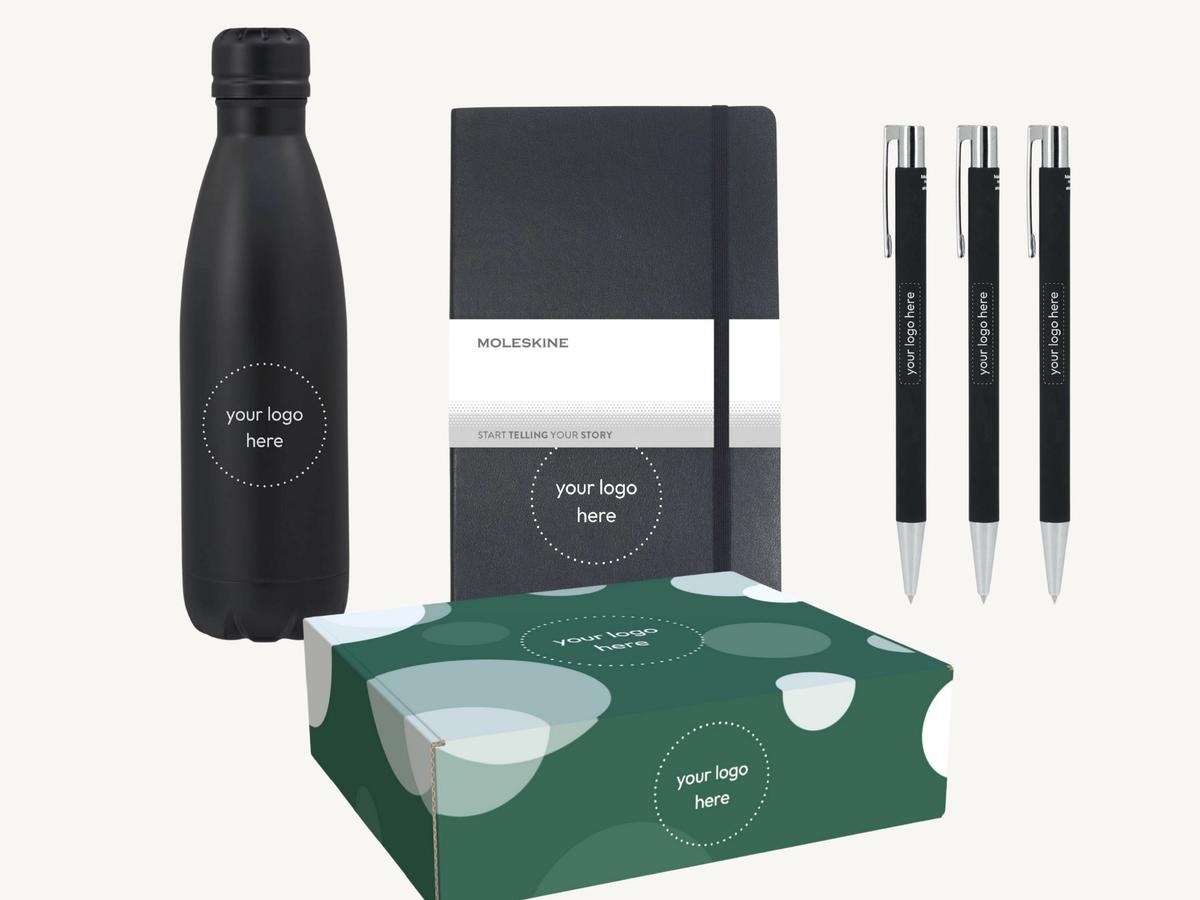
Ship day-one onboarding kits to every new hire, anywhere
Merchwell handles kitting, warehousing, address collection, and individual shipping so the box lands on time.
A great onboarding kit is mostly a logistics problem wearing a gift box. The contents are the easy part. The hard part is getting the right kit to the right person, at fifty different home addresses, so it arrives the morning they start and not three weeks later. For remote-first and hybrid teams, that timing is the whole game, and it is where most onboarding kit programs quietly fall apart.
The stakes are higher than they look. Research from the Brandon Hall Group has found that a strong onboarding process improves new-hire retention by roughly 82%, and a physical kit that shows up on day one is one of the most visible signals a company sends about whether it has its act together. A new hire who unboxes a thoughtful, on-time kit reads it as proof the company is organized and glad they joined. A kit that arrives late, or not at all, says the opposite before the first standup.
This guide is about the operational side: what belongs in an onboarding kit, how to collect addresses without chasing people, how kitting and warehousing actually work, and how to coordinate shipping so the box lands on schedule. If you want the broader strategy on what makes a welcome kit land emotionally, our new hire welcome kits guide covers the why; this one covers the how.
One framing before the details. An onboarding kit is not a one-time purchase, it is a repeatable shipping operation. The companies that do it well stop treating each new hire as a fresh scramble and instead set up a system that runs the same way whether they hired one person this month or a dozen.
What actually goes in an onboarding kit
The contents matter less than people think, but they still need to clear a bar. A good onboarding kit usually mixes three things: something wearable, something useful at the desk, and something that makes the first day feel personal. Skip the filler. A kit of five cheap items reads worse than a kit of three good ones.

The anchor item should be something they would own anyway. A quality piece of branded apparel or premium drinkware carries the logo without shouting it and gets used long after week one. This is the item the new hire keeps, so it is worth spending here rather than spreading the budget thin across novelties.
The desk item earns its place by being practical. A solid notebook, a good pen, a tech accessory they will actually plug in. The test is simple: would the recipient have bought it themselves? If not, it is filler.
The personal touch is what separates a kit from a supply drop. A handwritten or printed welcome note, the new hire's name on the box, or a small nod to their team. It costs little and it is the part people photograph. For a deeper breakdown of what belongs inside versus what to skip, our employee swag guide is a useful companion.
Most onboarding kits land in the $40 to $100 per-person range. The number matters less than the coherence — a kit should feel like it was assembled on purpose, not pulled from whatever was in the supply closet.
The real problem: addresses and timing
Here is where onboarding kits actually break. You have a new hire starting in ten days, you need their home address, their shirt size, and maybe a preference or two, and you do not want HR manually emailing each person and copying answers into a spreadsheet. Multiply that across a growing team and the admin overhead becomes the reason the program gets abandoned.
Address collection should be self-serve. The cleanest setup sends each new hire a short form link that captures their shipping address and sizing the moment they accept the offer. No back-and-forth, no HR inbox full of half-answers. The data flows straight into the fulfillment queue, and the kit can ship the day it needs to. Merchwell handles this collection step as part of the program, so address and size data is gathered directly from the recipient rather than routed through your team.
Timing is a coordination problem, not a shipping-speed problem. The goal is not to ship fast, it is to ship so the kit arrives on the right day. That means working backward from the start date: account for decoration and kitting time, transit time to that specific address, and a buffer. A kit that arrives two days early sitting on a doorstep is fine. A kit that arrives the afternoon of day one, after the welcome call, has missed the moment.
For teams hiring on a predictable cadence, the smart move is to produce kits ahead of demand and hold them, so each new start triggers a ship rather than a fresh production run. That is the difference between a program that scales and one that scrambles.
How kitting and warehousing work
This is the part most HR teams have never had to think about, and it is exactly where a fulfillment partner earns its keep. Kitting just means assembling the individual components — the apparel, the drinkware, the note, the packaging — into one finished, ready-to-ship box. Warehousing means those finished kits, or the components, sit in storage until a new hire triggers an order.

The reason this matters: decoration and assembly have lead times, but hiring does not wait for them. If you produce kits only when someone starts, you are stuck with a two-to-three-week lag every single time. If you produce a batch up front and warehouse it, the lead time is absorbed once, and every future kit ships in a day or two.
A typical Merchwell onboarding program runs like this:
- Design and approve the kit once. Lock the contents, decoration, and packaging.
- Produce a batch and store it. Finished kits or pre-decorated components are warehoused, ready to go.
- Collect recipient data automatically. Each new hire fills a short form on accepting the offer.
- Ship individually, on trigger. Each start date releases one kit to one address, timed to land on day one.
- Replenish before the shelf runs low. Reorder the batch when inventory dips, so you never run dry mid-quarter.
The result is that a fifty-person hiring year feels the same operationally as a five-person one. The work happens once, up front, and then the system runs.
Shipping to many addresses without a spreadsheet
Individual shipping is the capability that separates a real onboarding program from a bulk swag order. Sending one box to one office is easy. Sending fifty boxes to fifty home addresses, each timed to a different start date, each with the right size — that is a fulfillment operation, and doing it by hand does not scale.

This is the core problem for remote-first companies: a distributed team means there is no central office to ship to, so every kit is a separate shipment with its own address, timing, and tracking. Merchwell's fulfillment model is built for exactly this — pick, pack, and ship individual kits from warehoused inventory, with the address and sizing data already captured, so HR never touches a shipping spreadsheet.
For teams that also send ongoing swag beyond onboarding — milestone gifts, team event kits, client gifts — the same warehoused-and-shipped-individually model applies. Our corporate swag boxes guide walks through how the kitting approach extends past day-one onboarding into a full program.
Four mistakes that sink onboarding kits
Most failed onboarding kit programs trip on the same operational issues, not on taste.
Collecting addresses too late. If you wait until the start date is near to chase a home address, you have already lost the buffer. Capture it at offer acceptance, automatically, and the timing problem mostly solves itself.
Producing on demand instead of ahead. Building each kit only when someone starts bakes a two-to-three-week lead time into every hire. Produce a batch up front, warehouse it, and ship on trigger.
Optimizing for ship speed instead of arrival date. Overnight shipping is expensive and still misses the point if the kit goes out late. Work backward from day one and ship on a calm ground timeline.
Over-stuffing the box. Five cheap items feel like a giveaway; three good ones feel like a gift. Spend on the anchor item and cut the filler.
A simple onboarding kit timeline
Working backward from a new hire's start date keeps the program honest. A rough cadence that holds up:
- On offer acceptance: Recipient gets the address-and-sizing form. Data lands in the fulfillment queue automatically.
- 7 to 10 days before start: Kit is released from warehoused inventory and enters the ship queue.
- 2 to 4 days before start: Kit ships on a ground timeline to the recipient's address, with tracking.
- Day one: Kit has already arrived. The new hire unboxes it the morning they start.
Because the kits are produced ahead and warehoused, none of this depends on decoration lead times in the moment. The only clock that matters is transit time to a single address, which is predictable and cheap when you are not paying for overnight air.
Onboarding kit vs. ongoing recognition
It is worth drawing one line clearly. An onboarding kit marks the start of the relationship — day one, welcome, glad you are here. That is different from the recognition gifts that come later, like the ones in our employee recognition gifts guide, which mark milestones once someone is established. Both belong in a healthy program, but they are different moments with different contents and different timing. The onboarding kit's whole job is to make the first day feel handled.
The takeaway
A good onboarding kit is a system, not a shopping trip. Get the contents to a sensible bar — one anchor item people keep, one practical desk item, one personal touch — and then put your real attention on the logistics: self-serve address collection, kits produced ahead and warehoused, and individual shipping timed to land on day one. Done that way, the program scales from one hire to fifty without adding a single hour of HR admin per box.
Noah Jolly runs Merchwell, where we help companies build onboarding, recognition, and company swag programs that ship on time and feel like more than merch.
Get pricing for your onboarding kit program
Tell us your headcount, hiring cadence, and a target budget, and we'll send back a kit mix and a fulfillment plan that lands on day one.
Get a quote for your team
Tell us what you have in mind and a rough quantity. We'll send pricing, a mockup with your logo, and lead times.


